
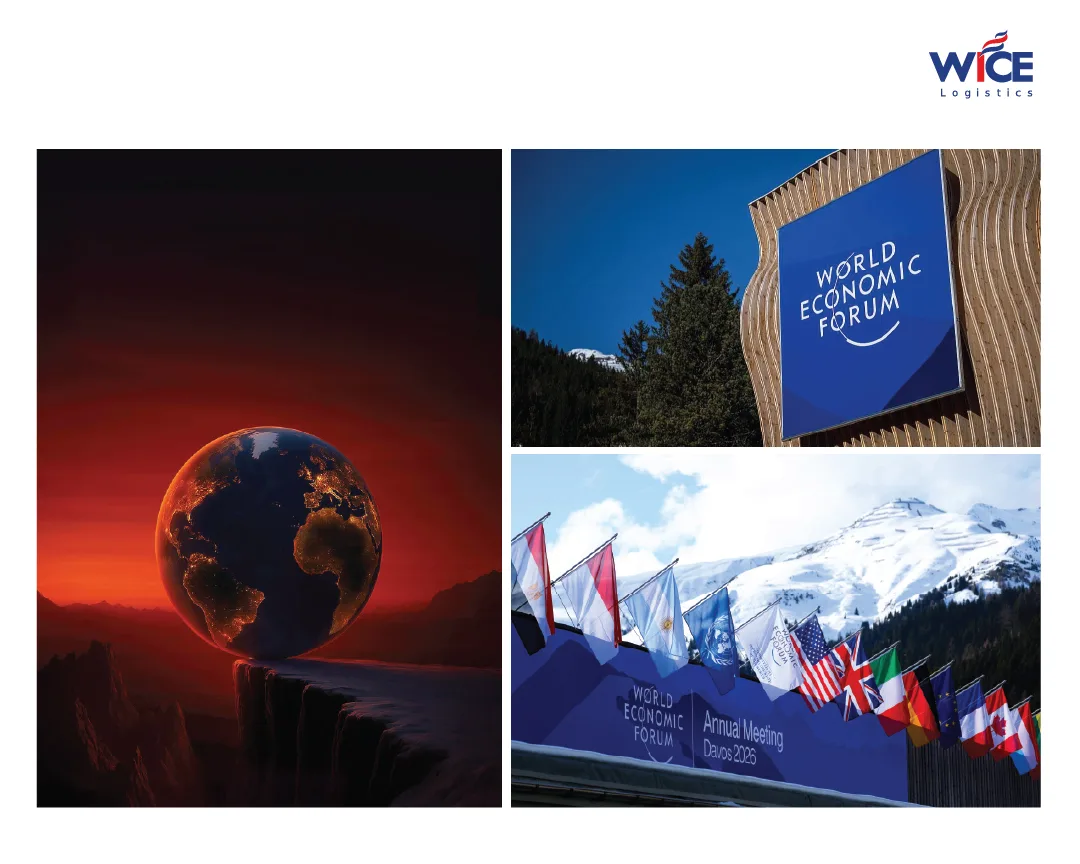
On January 14th, 2026, World Economic Forum just published the 2026 Global Risk Report, marking the midpoint of an exceptionally turbulent decade. The cover of this 21st edition depicts the world perched on the edge of a cliff with flaming red backgrounds, capturing the urgency and precariousness of the moment. But what does this shocking imagery signify, what key warnings and insights does the report deliver? This article explores the central messages you need to know.
The central message of the 2026 Global Risks Report is clear: the greatest danger today is not any single crisis, but the convergence of many. Political instability, economic stress, environmental breakdown, and technological disruption are no longer unfolding in isolation. They are colliding, reinforcing one another, and creating conditions for systemic failure.
One of the most immediate risks identified in the report is accelerating geopolitical and economic fragmentation. Rising geopolitical tensions, regional conflicts, and weakening multilateral cooperation are reshaping the global order. At the same time, the global economy remains fragile, burdened by high debt levels, uneven growth, and persistent inflationary pressures. Together, these forces are disrupting supply chains, destabilizing energy and food markets, and undermining confidence in global trade. Geopolitical risk is no longer a background concern; it has become a core economic variable.
Looking further ahead, climate and environmental risks dominate the long-term outlook. Extreme weather events, failure to adapt to climate change, biodiversity loss, and resource scarcity are consistently ranked among the most severe global threats over the next decade. Crucially, the report frames climate change not as a standalone risk, but as a risk multiplier; one that intensifies food insecurity, drives forced migration, fuels conflict, and strains public finances. The consequences are already visible, and they will only accelerate without decisive action.
Technology, meanwhile, is emerging as a double-edged sword. Rapid advances in artificial intelligence and digital technologies offer enormous potential for productivity and innovation, but they also introduce new vulnerabilities. The report highlights growing concerns around cyber insecurity, data misuse, and the spread of AI-driven misinformation. In an environment of declining trust and rising polarization, digital instability threatens democratic processes, social cohesion, and institutional legitimacy.
Beneath these global forces lies a layer of social risk that cannot be ignored. Rising living costs, widening inequality, demographic shifts, and workforce disruption are placing sustained pressure on societies worldwide. Without adequate reskilling, social protection, and inclusive growth, these pressures risk translating into political unrest and long-term economic fragility.
Perhaps the most important insight of the 2026 Global Risks Report is the recognition that risk itself has changed. Today’s crises are increasingly systemic. Climate shock can trigger food shortages, which drive migration, which inflames geopolitical tensions. Cyber incidents can cascade through financial systems, public services, and critical infrastructure. Yet most institutions remain organized around silos, ill-equipped to manage these complex interdependencies.
The image of the cliff on the report’s cover is not a prediction of inevitable collapse. It is a choice. The report ultimately calls for stronger global cooperation, forward-looking governance, climate-aligned decision-making, responsible technology development, and greater investment in resilience across systems.
In a decade defined by volatility, the message is unmistakable: the cost of inaction is rising faster than the cost of transformation. Whether the world steps back from the edge, or moves closer to it, will depend on the decisions made now.
Reference:
https://reports.weforum.org/docs/WEF_Global_Risks_Report_2026.pdf