
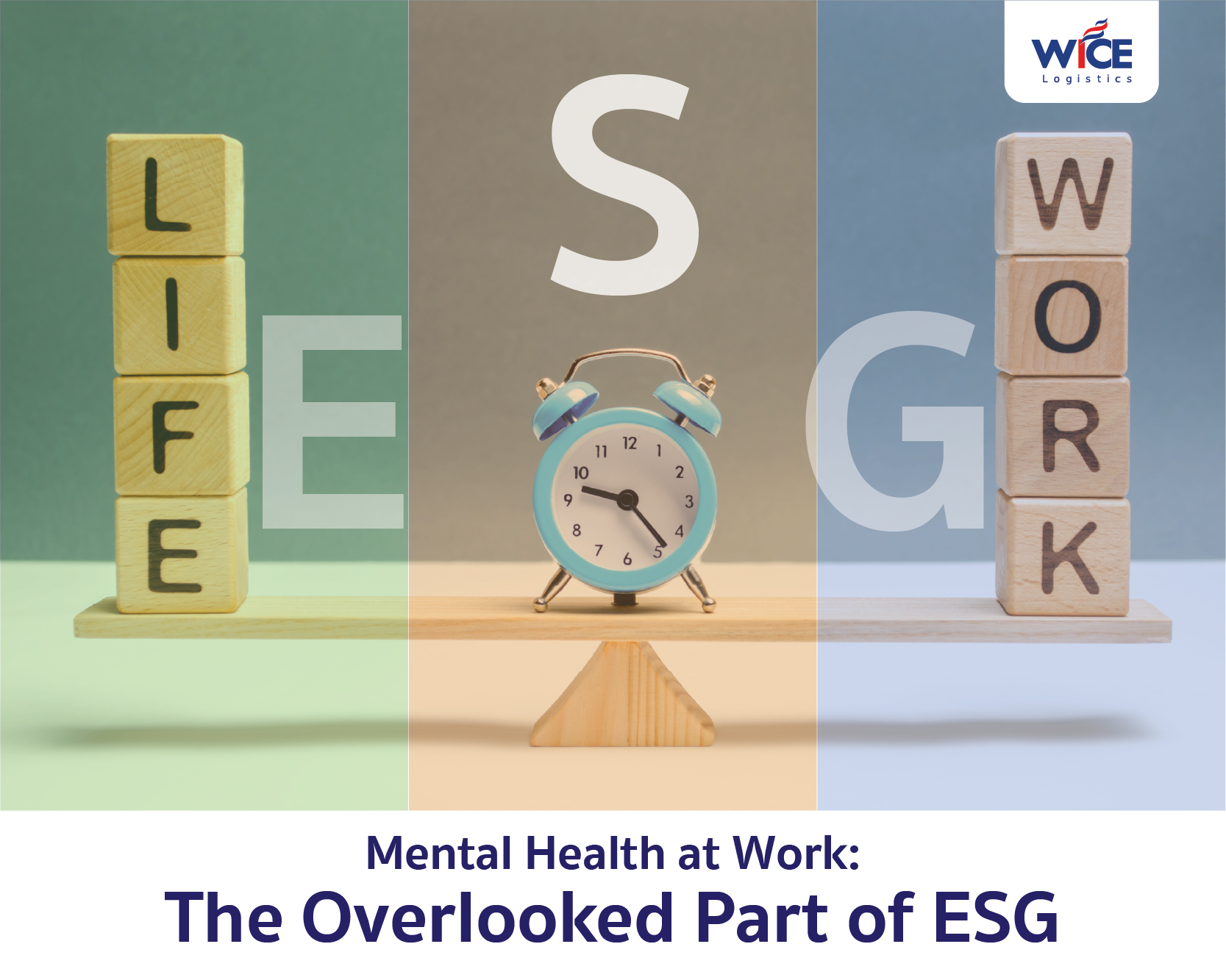
When talking about sustainability, discussions often focus on reducing emissions or strengthening governance. Yet one essential element is sometimes overlooked – the people who make everything happen. In today’s demanding work environment, long hours, tight deadlines, and constant pressure can take a serious toll on mental health. These challenges affect not only individuals but also the long-term sustainability of an organization, where employees remain the true driving force behind success.
Traditionally, ESG reporting has focused more on environmental and governance factors, while the social aspect – especially employee well-being – often receives less attention. Yet overlooking mental health can quietly weaken an organization, leading to stress, lower morale, and reduced productivity. In contrast, organizations that prioritize mental health build stronger, more connected teams. When people feel supported, they collaborate better, think more creatively, and stay engaged.
Global companies are increasingly recognizing this connection. Unilever, for example, embeds mental well-being into its Sustainable Living Plan by training managers to recognize signs of stress and promoting “mental health parity”, treating mental health with the same importance as physical health. Microsoft has taken a similar approach by offering flexible work arrangements, providing access to counseling services, and training leaders to identify burnout early. Both companies demonstrate that caring for mental health is not just an act of compassion, but a strategic investment that enhances innovation, productivity, and retention.
Integrating mental health into ESG strategies can be as simple as creating an open culture where conversations about well-being are normalized, offering flexible support such as mental health days or counseling, and having leaders model healthy behaviors while recognizing signs of stress or burnout. Ultimately, building a culture that values well-being requires participation from everyone, at every level.
Mental well-being at work is not only an aspect of social responsibility but also about building a healthy, resilient, and human-centered organization. As the Triple Bottom Line reminds us – People, Planet, and Profit – true sustainability lies in protecting both the planet and the people who drive progress. When people thrive, the organization thrives too.